
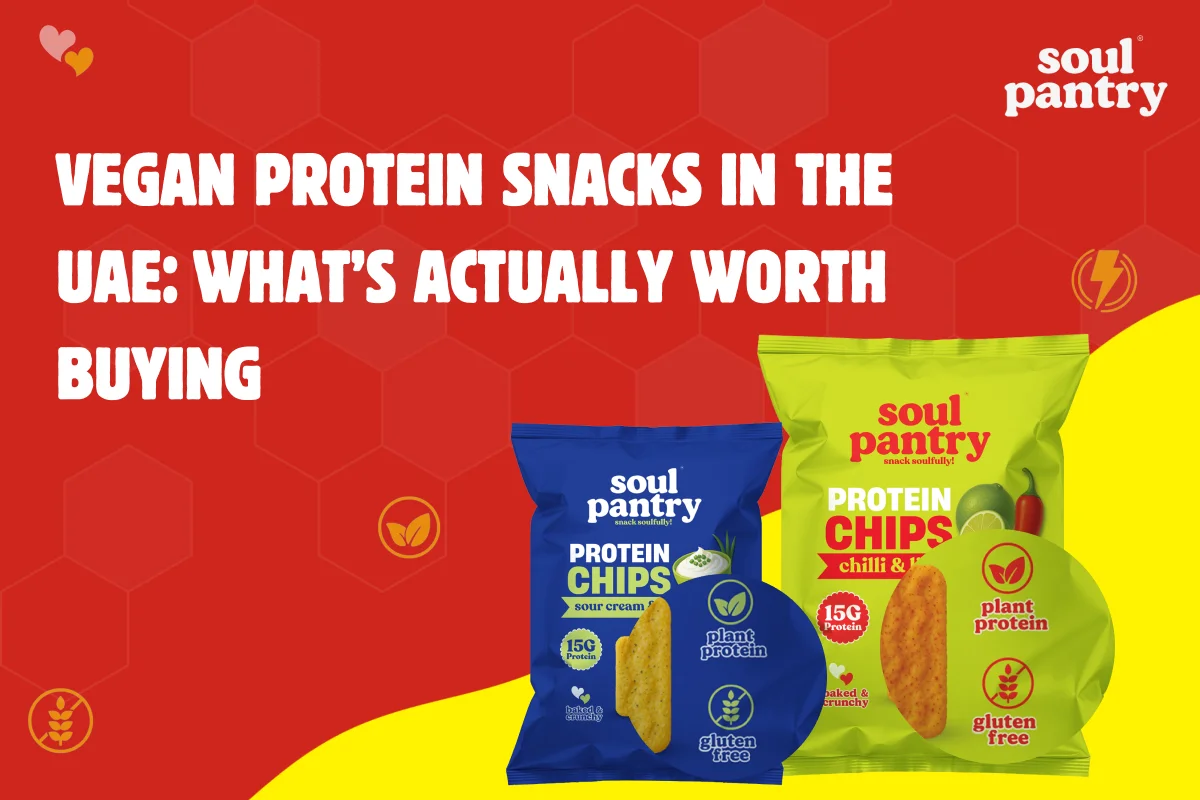
Vegan Protein Snacks in the UAE: What’s Actually Worth Buying

Shopping vegan in the UAE has got a lot easier, and a lot more confusing at the same time.
You’ll find shelves full of green packaging and the word plant, and a fair few of those products still have milk powder somewhere in the ingredients. The front of a packet is marketing. The back is your actual answer.
Here’s what to check, what’ll catch you out, and which protein snacks are genuinely worth your money.
Plant-based and vegan are not the same word
This trips up more people than anything else on the shelf, and it’s probably the reason you’re reading this.
Plant-based usually means the product is built mainly on plants. It’s a marketing description, and it doesn’t guarantee there’s nothing animal-derived in there.
Vegan means no animal ingredients at all. No milk powder, no whey, no honey, no gelatine, no egg white, and no carmine for colour.
So a product can honestly call itself plant-based and still hide a milk derivative in the coating or the crisps. If it matters to you, the word on the front isn’t your check. The ingredients list is.
The five things that actually catch people out
Run your eye down the ingredients and look for these five specifically, because they’re the ones that hide in otherwise plant-looking snacks.
Whey and milk protein. By far the most common. Plenty of protein bars use a whey blend inside otherwise plant-friendly packaging, and whey crispies are easy to miss in a long list.
Honey. Very common in bars and clusters as the binding sweetener, and not vegan.
Milk chocolate and non-dairy creamer. Read the coating separately from the bar. Coatings are where dairy usually turns up.
Gelatine. Rare in snacks, standard in anything gummy or chewy.
Shellac and carmine. Glazing agents and red colouring, both animal-derived, both usually hiding behind an INS number rather than a name.
That’s your whole checklist. Learn those five and you’ll clear a shelf in about a minute.
Certified vegan or just no animal ingredients?
Worth understanding the difference before you decide how strict you need to be.
A product can have no animal ingredients and still not be certified vegan, usually because it’s made on shared equipment or the brand hasn’t gone through the certification process. Certification adds a check on cross-contamination and supply chain that an ingredients list on its own doesn’t cover.
For most people, reading the ingredients is enough. If you’re strict, or you’re buying for someone who is, ask the brand for their certification status in writing rather than reading it off a green leaf on the label. That goes for any brand, including ours.
What’s genuinely worth buying
Judge a vegan protein snack on the same three numbers you’d use for any other, then check the ingredients.
Protein per serving, not per 100g. Fifteen grams is a reasonable floor for something meant to hold you between meals. The full version of that maths is in our guide to how much protein a snack should have.
Fibre. Five grams or more. Plant snacks often carry decent fibre and it’s the reason they tend to hold hunger well, so it’s a shame to buy one that’s been stripped of it.
A protein blend rather than one source. A single plant protein can be short on an amino acid or two. A blend covers the gap, which is why serious products list two or three.
Then the format question. Baked beats fried for how it keeps in a warm cupboard here, and uncoated beats chocolate-coated for surviving a Gulf summer, which we went through properly in the piece on building a healthy snack box.
Where our range stands, stated plainly
We’d rather tell you exactly which of ours fit than let the packaging imply all of them do.
The protein chips are built on pea protein isolate, brown rice protein and green gram protein, with rice and corn grits, chickpea flour and rice bran oil. No animal ingredients, 15g of protein and 5.5g of fibre per 50g serving, baked rather than fried, and gluten free.
Brownie Decadence is built on pea protein isolate and soy protein isolate with soy crispies, sweetened with date paste, at 18g of protein and 4.5g of fibre. It contains soy, which matters if that’s one of yours.
Espresso Euphoria is not one to buy if you’re vegan. It’s built on whey protein concentrate, whey protein isolate, whey crispies and milk protein isolate, and it contains almonds. It’s a good bar and it’s the highest protein of the three, but it’s a dairy product and we’d rather say so here than have you find out from the packet.
On certification, we’re being straight with you: read the ingredients above, and if you need certified vegan status specifically, ask us for it rather than assuming.
Building a week around it
The failure with vegan snacking is rarely the first purchase. It’s week three, when the two things you bought have become boring and the easy option in the shop isn’t suitable.
So buy range rather than depth. Three or four flavours you rotate beats a big box of one, and it’s the single change that keeps people eating what they bought. If you want the fuller argument on that, we made it in the snack box guide.
And keep one savoury option in the mix. Most vegan snacking goes sweet by default, and a 4pm craving is usually salt.
The Bottom Line
Ignore the front of the packet. Read the ingredients for whey, milk, honey, gelatine and the glazing agents, and you’ll sort a shelf quickly.
Then hold it to the same standard as anything else. Fifteen grams of protein per serving, five grams of fibre, a protein blend rather than a single source, and a format that survives your cupboard.
If you want certified vegan rather than simply free of animal ingredients, ask the brand in writing. And if you’re buying from us, the chips and Brownie Decadence are your two. Espresso Euphoria isn’t.
FAQs
Are all plant-based snacks vegan?
No, and this is the most common mistake. Plant-based is a marketing description. A product can be mostly plants and still contain milk powder, whey or honey. Only the ingredients list settles it.
What should I look for on a label to check if a snack is vegan?
Whey and milk protein, honey, gelatine, milk chocolate or non-dairy creamer in coatings, and the animal-derived glazing agents shellac and carmine. Those five cover almost everything that catches people out.
Are Soul Pantry protein chips vegan?
The chips contain no animal ingredients. They’re built on pea, brown rice and green gram protein with rice and corn grits, chickpea flour and rice bran oil. They are not certified vegan, so if you need certification specifically, ask us rather than assuming.
Which Soul Pantry bar is not suitable for vegans?
Espresso Euphoria. It’s made with whey protein concentrate, whey protein isolate, whey crispies and milk protein isolate, and it also contains almonds. Brownie Decadence is the plant-based bar, made with pea and soy protein.
How much protein should a vegan snack have?
The same as any other snack. At least 15g per serving if it’s meant to hold you between meals, and closer to 20g if it follows training or replaces a meal.
Do vegan protein snacks have complete protein?
A single plant source can be low in one or two essential amino acids, so look for a blend of two or three rather than one on its own. That combination covers the gaps.
Is soy a problem in vegan snacks?
Not for most people, and it’s one of the better plant proteins nutritionally. It is a common allergen though, so it’s worth checking if you’re buying for someone else.