

What to Snack On Before and After the Gym If You’re Training in the UAE Heat

Step outside for a 6pm run in August and your body fights two battles at once. One is the workout. The other is a 42-degree evening at 60% humidity, where the sweat on your skin isn’t evaporating, so your core temperature climbs while your heart rate does the same. You’re not getting a harder workout. You’re getting a compromised one.
That’s the part most people training here get wrong. They copy nutrition advice written for London or Los Angeles and wonder why they’re flat by the third set, cramping by the fifth, and destroyed for the rest of the evening. The gym might be air-conditioned, but the twenty minutes you spent getting there in a hot car wasn’t, and your body doesn’t reset the moment you badge in. This is why high protein snacks that work fine in a temperate climate can quietly fail you here, and why the timing matters more than the macros ever will.
Sweat rates in the Gulf regularly hit 1.5 to 2 litres an hour during moderate training, taking sodium with it. Everything below is built around that.
Why Heat Changes the Whole Equation
Heat doesn’t just make training uncomfortable. It reroutes your physiology in ways that directly affect what you should be eating.
When your core temperature rises, your body prioritises cooling over everything else. Blood gets shunted from your gut to your skin to dump heat. That’s smart thermoregulation and terrible digestion. Whatever’s in your stomach stays there, undigested, sloshing while you squat. This is why the pre-workout meal that felt fine in Manchester feels like a brick in Al Quoz.
Heat also accelerates glycogen depletion. Your muscles burn stored carbohydrate faster when hot, because cooling itself has a metabolic cost. You’re paying an energy tax just for existing at 40 degrees, before lifting anything.
Third, and most underrated, you lose sodium at a rate that makes plain water actively unhelpful. Replacing a litre of salty sweat with a litre of water dilutes what’s left. That’s how people cramp while drinking constantly and swearing they’re doing everything right.
The Pre-Workout Window Is Shorter Than You Think
Standard advice says eat 90 minutes to two hours before training. In this climate, that window compresses.
Training indoors in strong AC without much heat exposure getting there? Normal rules hold. Solid food, 90 minutes out, no drama. Training outdoors, or coming off a long hot commute? Cut it. Aim for 45 to 60 minutes with something small and digestible, or skip solid food and train on lunch. A stomach full of food you can’t digest is worse than a slightly empty one.
The rule: the hotter your environment, the smaller and earlier your pre-workout food. Density is the enemy.
What Actually Works Before You Train
Keep it simple and keep it light.
A banana and a small handful of salted nuts, 45 minutes out. Fast carbohydrate, some sodium, minimal digestive load. Boring and effective.
Half a protein bar, not a whole one. You don’t need 20g of protein before training. Protein isn’t pre-workout fuel, carbohydrates are. Half a bar puts something in the tank without the weight.
A pinch of salt in your water bottle. Not a supplement, actual salt. Training outdoors between May and September, this does more for cramping than anything else here.
Black coffee, 45 minutes out, carefully. Caffeine works. It’s also a mild diuretic and nudges core temperature up. Outdoors in July, dial it back.
Avoid anything high in fat or fibre. Both slow gastric emptying, and slow gastric emptying plus heat is a genuinely bad time.
The Post-Workout Reality Nobody Talks About
Here’s what nobody mentions about training in this climate: your appetite disappears.
You finish a session, you’re overheated, and the last thing your body wants is food. That’s not a weakness. Elevated core temperature suppresses appetite, and it stays suppressed for an hour or more afterwards. Add heat, traffic, and a shower, and you’ve gone three hours post-training before eating anything real. That gap is where recovery quietly falls apart. You did the work, then didn’t feed the adaptation.
Fix It With Format, Not Willpower
You need something you can get down when you don’t want food. Liquid, cold, or small. Not a heavy meal, and not a chicken and rice container that’s been in a hot car.
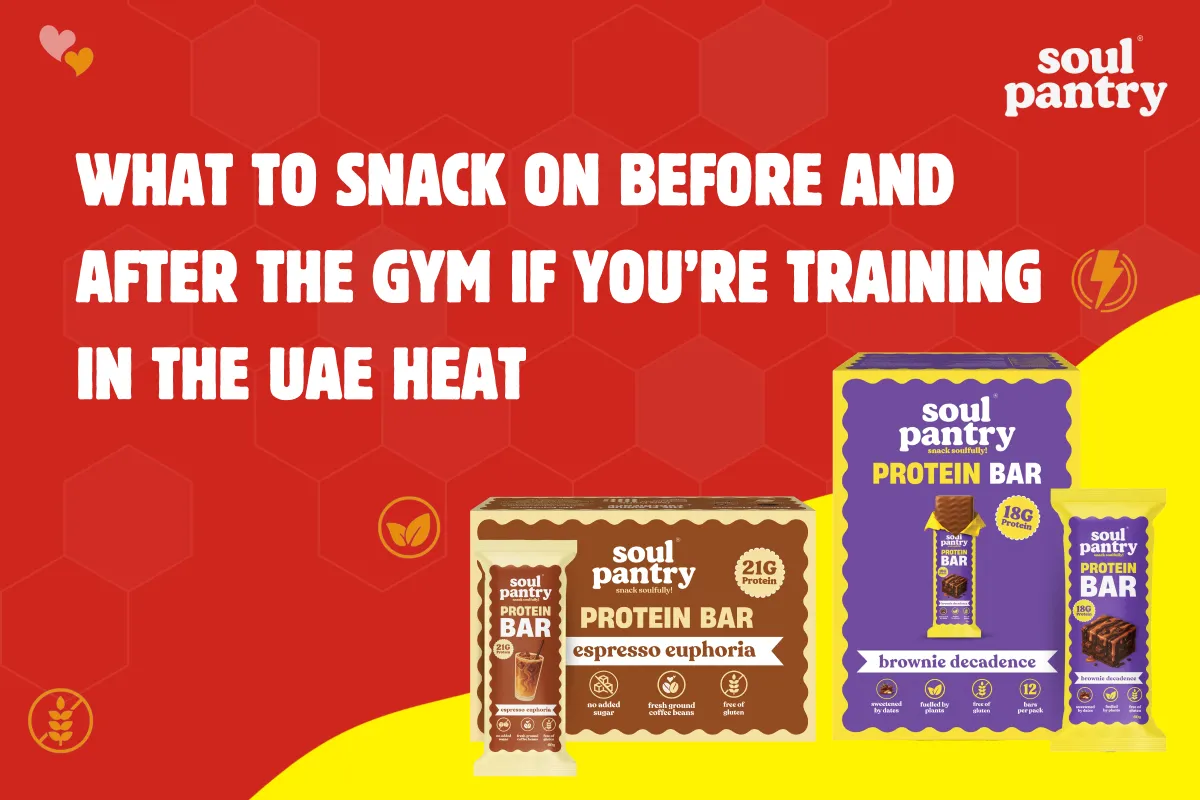
Protein bars UAE-side earn their keep here more than anywhere else. Espresso Euphoria carries over 20g with no added sugar, Brownie Decadence sits around 18g, and both cover the post-training requirement in a format you can eat one-handed while the AC catches up. Twenty grams within an hour is the number that matters, and a bar you’ll actually eat beats the perfect meal you’ll skip.
Pair it with something salty. Your recovery protein isn’t replacing the sodium you sweated out. This is where savoury does work a shake can’t.
Building a Gym Bag That Works in August
A gym bag in a Dubai car park in summer is an oven. Anything you put in it needs to survive that, and most things don’t.
Chocolate-coated anything is out. It melts, resets into a different shape, and you open it once before binning it. Uncoated is the only format that survives.
Fresh fruit lasts one day. A banana in a hot bag is a science experiment by Thursday.
Shakes get made fresh. Pre-mixed protein sitting in a warm bottle for four hours is a bacterial situation, not a recovery drink. Carry the powder dry.
Baked beats fried. Fried snacks turn rancid faster in heat as the oils oxidise. Baked holds up far better across a summer.
This is exactly why Soul Pantry bakes its chips rather than frying them and keeps its bars uncoated. That’s not health positioning, it’s a heat decision. The chips run about 15g of protein a pack, gluten-free, no added sugar, which handles both the sodium job and the savoury craving that hits after a hard session. Smokey Chipotle or Himalayan Pink Salt do salt work a sweet bar can’t.
For a fuller list beyond the gym bag, the high protein vegetarian snacks in UAE guide covers what to stock at home.
Timing It Around the UAE Training Day
Most people here train at one of three times, and each has a different nutrition problem.
Early morning, 5am to 7am. Training fast is fine under an hour. But eight hours of sleep in dry AC leaves you mildly dehydrated already. Drink 400 to 500ml with a pinch of salt first. Eat after.
Lunchtime, 12pm to 2pm. Worst heat exposure getting there and back, best gym availability. Eat light at 10:30am, train, then get protein in fast because your afternoon depends on it.
Evening, 6pm to 9pm. The default, and the trap. You’ve not eaten since 2pm, so you arrive underfuelled and finish at 8pm with no appetite and no plan. Something small at 5pm and something protein-dense in the bag for the drive home solves it.
The pattern across all three: the meal you skip is never the one you planned to skip. It’s the one squeezed out by heat, traffic, or a dead appetite. Plan for that failure, not the ideal day.
The Short Version
Training here is a different sport than training somewhere temperate, and pretending otherwise is why people plateau through summer.
Eat lighter and earlier. Salt your water, actually. Accept that your appetite will vanish afterwards and pre-solve it with something you can eat when you don’t want to. Stock your bag with things that survive a car park in August, which rules out most of what’s marketed at gym-goers.
Do those four things and the heat stops being why your training stalls. It just becomes weather.
FAQs
Should I eat before training in the UAE heat?
Something small, yes, 45 to 60 minutes out if you’re training outdoors or arriving hot. Skip solid food entirely if you’re within an hour of a proper meal. Heat slows digestion, so density works against you.
How much protein do I need after a workout?
Around 20 to 25 grams within an hour. A bar with 18 to 20g covers it, and it’s far more likely to actually get eaten than a meal you’ll postpone until 10pm.
Why do I cramp even though I drink plenty of water?
Almost always sodium, not hydration. You’re losing 1 to 2 litres of salty sweat an hour and replacing it with plain water, which dilutes what’s left. Salt the bottle.
Will protein bars melt in my gym bag?
Coated ones will. Uncoated bars handle a hot car far better and stay edible. Check for coating before you buy a box for summer.
Can I train faster in this climate?
For sessions under an hour, yes. Beyond that, heat accelerates glycogen depletion and you’ll fade sooner than you would in a cooler climate. Fuel earlier if you’re going long.
What’s better after the gym, a shake or a bar?
Whichever you’ll actually consume. A shake is faster to absorb, a bar is easier to carry and doesn’t spoil in a hot bag. The perfect option you skip is worth zero.
Should I have something salty after training?
Yes, and most people miss this. A protein shake replaces protein but no sodium. Something savoury alongside it closes a gap that sweet recovery snacks leave wide open.